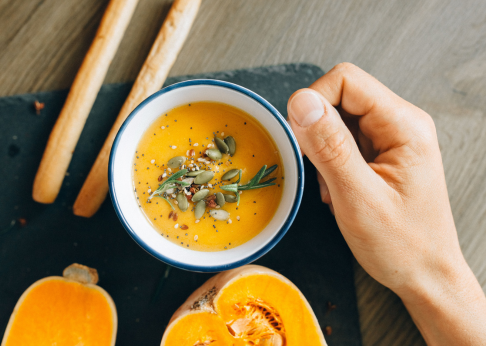

Who can resist pumpkin pie?
The holidays bring family and friends together to share in our favorite food traditions. But when you’re worried about digestive symptoms, holiday meals can feel stressful. The holidays often involve foods that are not consumed on a regular basis, often more indulgent foods and larger meals. While we tend to eat meals that are different from our normal nutrition repertoire during the holidays, it’s important to remember that food is so much more than its biochemical components.
Food is also culture, connection to family and friends, and a way of showing love to those around us. Holiday eating is important for these reasons, and finding ways to be flexible with your nutrition habits during this time will serve you well in the long run. The good news is that these three simple tips may help ease gas, bloating, and acid reflux so that you can enjoy your favorite holiday meals without worry.
Eating mechanics plays a significant role in how our body processes the food that we eat. Optimal eating mechanics supports better digestion, absorption, and may alleviate heartburn symptoms. This involves taking smaller bites of food, chewing each bite 20-40 times before swallowing, taking breaks during meals (set your utensils on the plate), taking a few deep belly breaths, noticing the textures and smells of the food, and aiming to take at least 30 minutes to complete the meal. You’ll notice that these tips help you to savor each bite of food with a bit more mindfulness of the foods that you’re enjoying. You may also notice feelings of fullness sooner during a meal, which can help you manage your portions. Chewing food to applesauce-like consistency mechanically breaks down the food to small pieces, giving digestive enzymes more surface area to work. The downstream effects are enhanced digestion and absorption.
Tune in to your feelings of hunger and fullness. Overeating, or eating larger than normal portion sizes is common during the holidays. On a scale of 1-10, with 1 being ravenous, 5 being neutral, and 10 being so full that you feel sick, where is your hunger before, during, and after a holiday meal? Aim to stop eating a meal when you feel satisfied, but not stuffed; “satisfied” is about a 6-7 on the hunger/fullness scale. Eating past fullness can exacerbate heartburn and feelings of bloating. Slowing down while you eat may help you feel your fullness better, and being mindful of portions at each meal may support modest to moderate food intake.
Gentle walking after a meal promotes optimal gastrointestinal motility, which may alleviate heartburn and bloating. Grab a friend or family member, and take a stroll! Especially in a time where you may deviate from normal exercise habits, taking gentle movement breaks throughout the day, especially timed around meals, can help keep things in the gastrointestinal tract moving smoothly.
This holiday season, we hope that the tips above help you to engage in your food traditions with better comfort and confidence. Salvo Health’s registered dietitians can help to tailor recommendations even more specifically to your case. Happy Holidays!