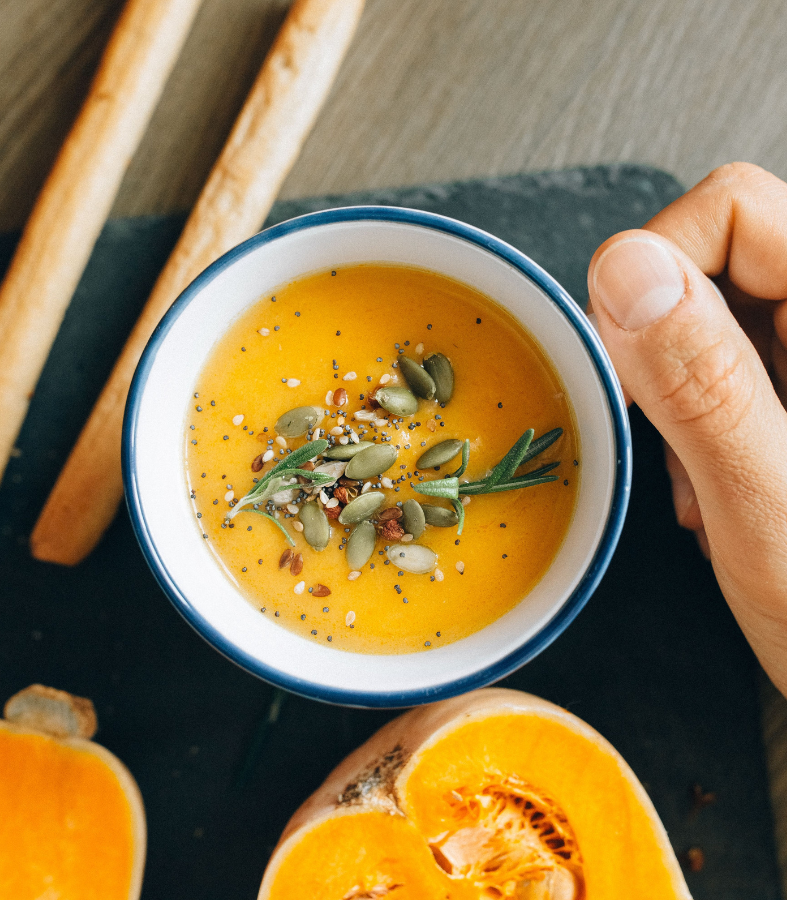

As cooler weather sets in, warm and cozy recipes begin to sound more exciting. For people who have more sensitive GI tracts, raw, cold autumn salads or heavy, dense comfort foods can actually trigger bloating, sluggishness, or irregular bowel habits. What’s easier on the gut? Soup.
Soup is one of the easiest ways to pack in veggies, beans, and protein without overloading your gut. Think of cooking it as a form of “pre-digestion”: no matter if simmering slowly in a crockpot while you’re busy or heating in a pot on the stove, the heat and moisture break down tough plant cell walls and soften tough muscle fibers in the meat. This combination does some of the heavy lifting for your digestive system, making nutrients like amino acids, iron, and fiber easier to access and digest while lowering gas, heaviness, and irritation.
Fiber comes in many forms: soluble fiber found in carrots, squash, oats, and canned lentils; and insoluble fiber such as kale, celery, and the skin on root vegetables such as potatoes. The softer soluble fiber dissolves in hot broth to form a soothing, nutrient-dense soup base, while this type of fiber also slows digestion and feeds beneficial gut bacteria (think: prebiotics and probiotics). The tougher insoluble fiber softens during the cooking process to create a gentler way to sweep through the colon without scratching the sensitive lining of the GI tract.
To get the most out of all that beneficial fiber, your body needs plenty of water to keep things moving comfortably — and that is where broth comes in!
Hydration doesn’t always need to come in the form of a glass of water or electrolyte drink; soup and broth bases provide water with essential electrolytes (sodium and potassium) that come from seasoning or are pulled from the vegetables, herbs, and beans in the recipe. This beautiful combination allows fluids to be better absorbed with a side of extra nutrients, including some vitamins and minerals. A quick safety reminder: for someone managing kidney disease or other health conditions, some high-potassium foods — like pumpkin, potatoes, or spinach — may need to be double boiled first, and recipes should be made with low-sodium broths.
When putting together your soup recipe, here are some tips to maximize the gut health benefits:
1. How can I make soup feel like a complete, filling meal instead of just a side?
To turn soup into a satisfying meal, aim for a balance of protein, fiber, and healthy fats. Pair your broth base with easy-to-digest proteins like shredded chicken, tofu, or slow-cooked meats or fish, then add a source of healthy fat like a drizzle of olive oil or slice of avocado. This combination slows down digestion, keeping you fuller for longer.
2. How can I make high-fiber soups easier to tolerate if I get bloated easily?
The key is choosing the right ingredients and portion sizes. Start low and go slow, meaning begin with well-cooked, low-FODMAP vegetables (think carrots and peeled, de-seeded zucchini) in a warm broth, and gradually add in smaller portions of beans or leafy greens over time to allow your gut to adapt to the increased fiber intake. This information is for educational purposes only. To personalize meals to your needs, talk with your dietitian.
3. Does freezing or reheating soup hurt its nutritional value or how I digest it?
Not at all! In fact, batch-cooking and freezing soup can not only save time (and money!), but also make digestion easier. Reheating cooked starchy ingredients, like potatoes, rice, or even oats, creates resistant starch — a special type of prebiotic fiber that feeds beneficial bacteria and supports a healthy gut lining, which may also help lower blood sugar.
.png)