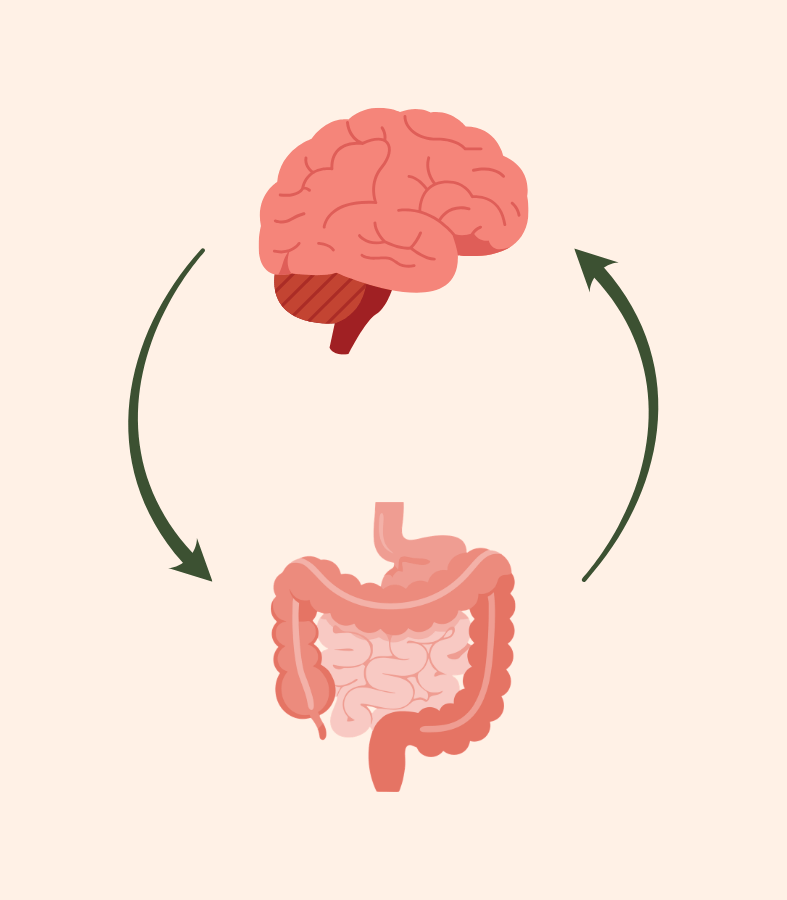

Our gut and brain function is a bi-directional axis, similar to a two-way highway. A disturbance in the gut can impact our brain function by altering the absorption of nutrients that are essential to nervous system function and impairing the production and uptake of neurotransmitters. The opposite is true as well, a period of heightened stress at work, or stress on the body like an injury or surgery, can show up in the form of changes within the digestive system. The vagus nerve innervates our GI tract and is heavily impacted by stress responses. One of the major drivers of this connection is the autonomic nervous system.
The autonomic nervous system is made up of two branches: sympathetic and parasympathetic. At the first signs of stress, the autonomic nervous system switches into sympathetic mode, otherwise known as fight-or-flight. In this state, adrenaline increases and the body gets ready to mount a response to the perceived threat. This looks like prioritizing circulation to the heart, lungs, and extremities rather than the digestive tract, and changes in transit time.
This stress response can take place completely under your radar and can show up in your GI tract in the following ways:
The parasympathetic side of the autonomic nervous system is more relaxed and is otherwise known as rest and digest. When the body is in a parasympathetic state, the body is better equipped to handle digestion, rest, and recovery. The vagus nerve often becomes more active in the parasympathetic state, supporting more normal digestive function.
This is a rough idea of what happens during acute stress — things like having an argument, getting stuck in traffic, or anticipating giving a speech. During acute stress, symptoms may be minimal or go completely unnoticeable.
On the other hand, long-term stressors leave less room for the nervous system to recover due to their persistent nature. In a lot of cases, periods of prolonged stress precede the emergence of GI issues.


.png)