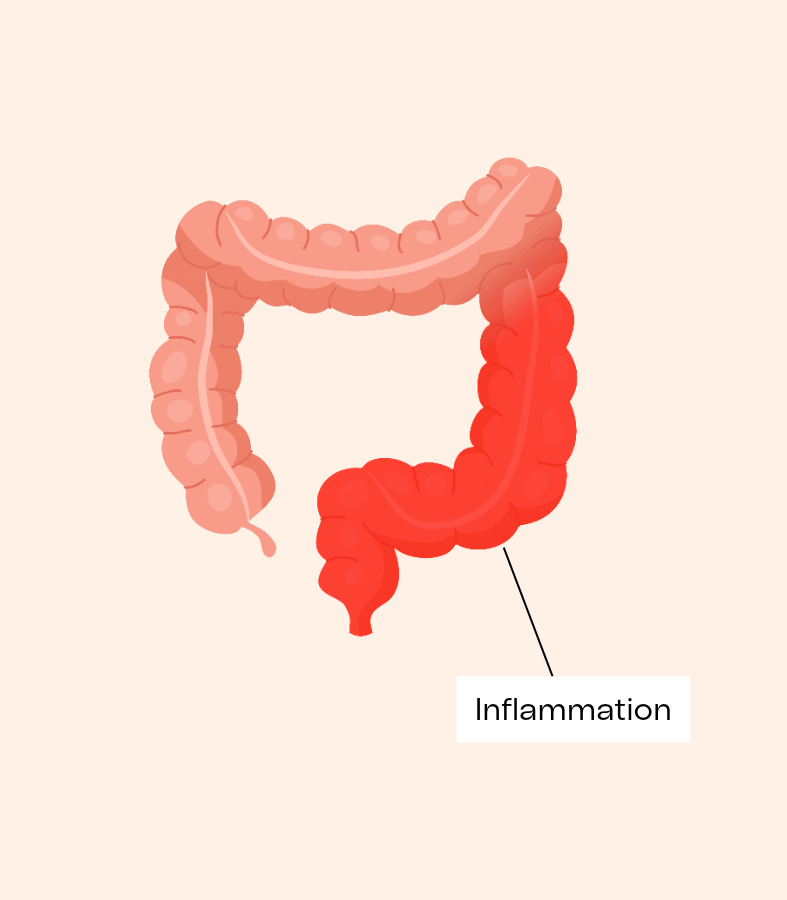

Crohn’s disease and ulcerative colitis are often grouped together because of their similar clinical presentations and the fact that they both fall under an umbrella known as Inflammatory Bowel Disease (IBD). IBD is characterized primarily by inflammation in the digestive tract, but Crohn’s and colitis are distinguished by a few factors: regions affected, etiology, patterns of inflammation, and complications that arise from each. Although the root cause of each condition is not fully understood, research suggests that genetics, the environment, gut microbiome, and abnormal immune responses all play a role in their development.
Crohn’s disease can affect any portion of the GI tract from the mouth to the anus, most commonly the end of the small intestine and the colon. In Crohn’s disease, inflammation can run deep, impacting several layers of the intestinal lining. This inflammation is typically segmental, meaning some parts of the intestines maintain healthy tissue.
Ulcerative colitis primarily affects the colon. The resulting ulcerations and inflammation are found consistently without any gaps. The inflammation in ulcerative colitis typically affects only the mucosal lining unlike Crohn’s disease.
Although many symptoms of IBD overlap like diarrhea, urgency, and abdominal pain, there are certain clusters of symptoms commonly associated with each condition. Symptoms vary from person to person and can change over time.
Crohn’s disease symptoms may include:
Ulcerative colitis symptoms may include:
In both Crohn’s and UC, patients typically experience cycles of symptom flares and remission.
Your body’s protein needs increase during IBD flares as the immune system is activated and protein is needed for tissue repair. This is especially important to consider for people who are already malnourished or have experienced significant, unintentional weight loss. Healthy adults usually require 0.8-1.0g protein/kg of body weight, but during an IBD flare protein needs rise to 1.2-1.5g/kg. Your Salvo Health registered dietitian (RD) can help you determine what an adequate protein intake looks like for you.
Low-residue/low-fiber diets are commonly recommended during IBD flare ups, as fiber can be rough on already inflamed tissue and increase symptom burden. Incorporating small particle sources of fiber is another strategy that may improve tolerance for some individuals. Some ways you can reduce particle size are by blending fruits and vegetables into smoothies or sauces and reducing chickpeas and beans into hummus or dip. Your Salvo Health RD can personalize fiber recommendations based on your individual history and tolerance.
During IBD flares, diarrhea often contributes to significant fluid losses. It is important to replenish lost fluid and electrolytes to support your body. Bone broth, electrolyte packets, and Gatorade or Pedialyte are some beverages that support oral rehydration.
As with any diagnosis, it is extremely important to have a well rounded care team of professionals that ensure you feel heard and cared for. Your Salvo Health dietitian and nurse work alongside your GI specialist to ensure you receive comprehensive, personalized care.